
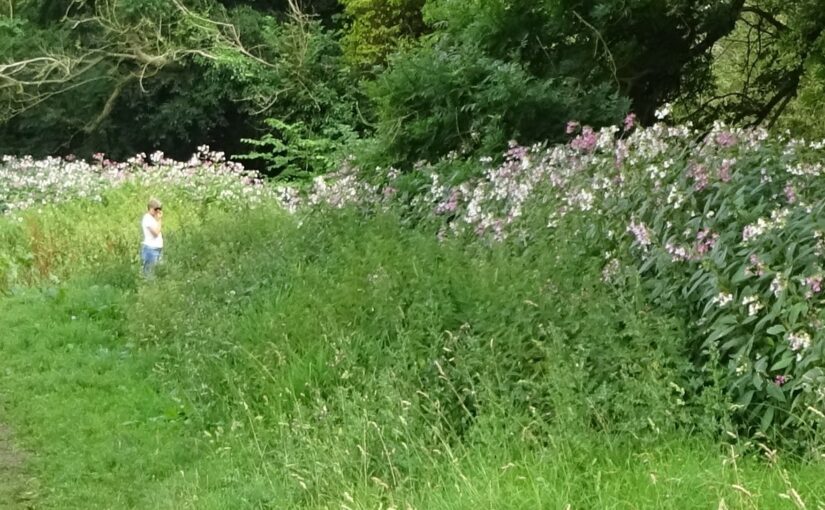
Himalayan Balsam (‘Policeman’s Helmet’, ‘Touch-me-not’, ‘Jumping Jack’) is a pretty but extremely invasive non-native annual plant. Introduced in the 19th Century it quickly spread into the wild and is common in the UK. It is spreading along the Cam and Granta and their tributaries and in recent years dense stands of plants up to 3m high have established on some stretches. It grows well in moist and semi-shaded damp places, predominantly on the soft banksides of slow-moving watercourses. Where it becomes dominant it reduces biodiversity, can choke waterways leading to flooding and competes with native flowers for pollinating insects–especially bees. Frosts kill the plants and in winter the ground is left bare and thus vulnerable to erosion leading to bank loss and unwanted sediment in the water.
Balsam seedlings emerge from March, pinkish flowers develop from late June until late September, and seed pods mature from August. Each plant produces up to 800 seeds which are shed up to 7 metres away. Patches become self-seeding, and seeds can be carried long distances downstream.
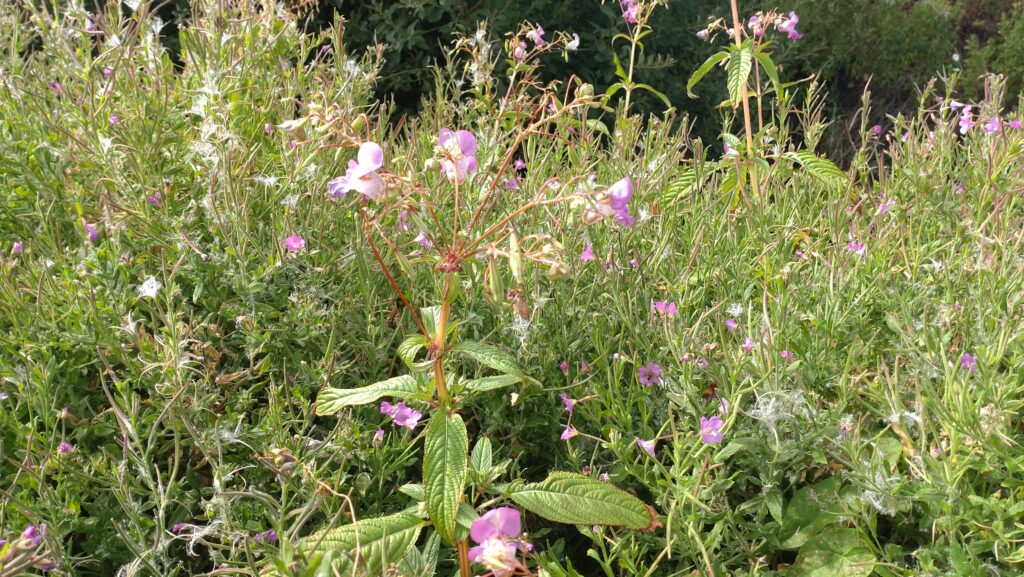
Himalayan Balsam is now listed under schedule 9 of the Wildlife and Countryside Act (1981) and it is an offence to plant it in the wild or otherwise cause it to grow in the wild.
Removal: We are focussing on removing it from a couple of areas, aiming to stop it encroaching on Cambridge.
Bourn Brook. We are working with the Wildlife Trust BCN and the Cambridge Conservation Volunteers in their ongoing efforts to eradicate it from Bourn Brook. “Our ” stretch is downstream of the footbridge (marked FB on the map below).
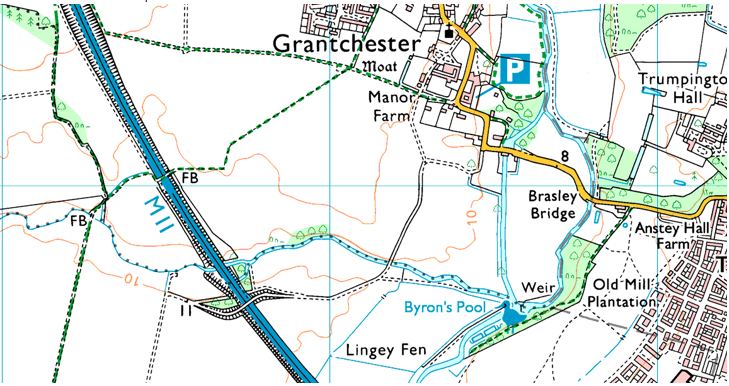
We are now exploring using contractors to help, which is going well. You can read about the project here
Newnham. We are also attempting to eradicate it from a meadow next to Newnham Riverbank Club, to avoid it infecting Paradise Local Nature Reserve in Newnham.
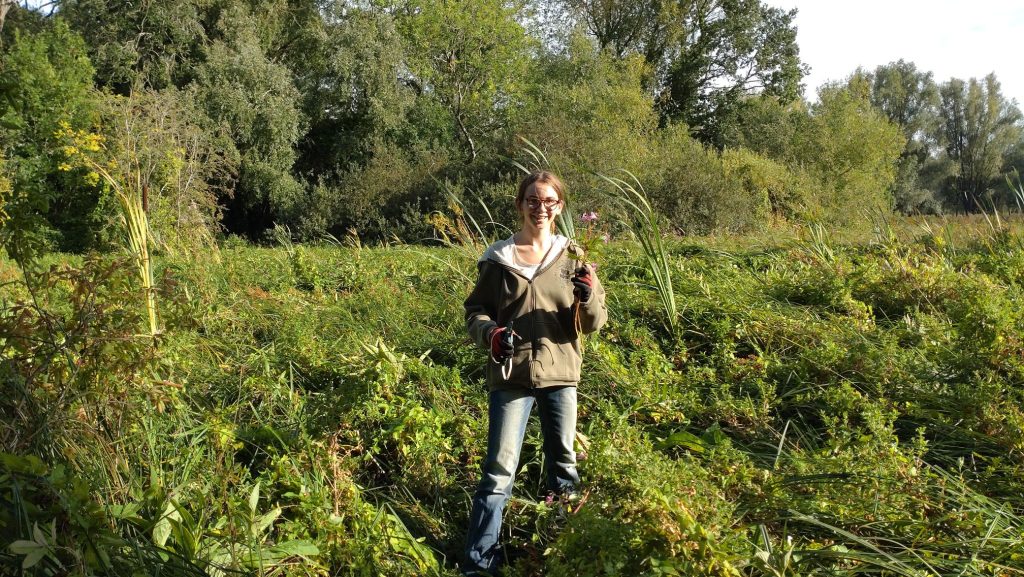
Elsewhere. We do not have the capacity to remove it from everywhere, but if you see it (and can safely do so) do pull it up by the roots and leave it somewhere dry to die. The resources below are available to help.
Himalayan Balsam Resources
Excellent advice leaflet from Pembrokeshire
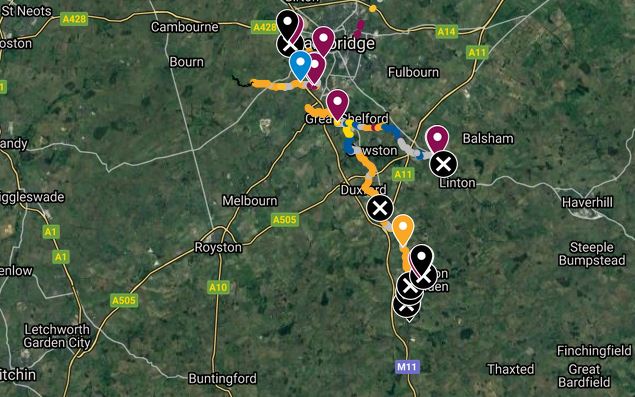
Status Maps of Himalayan Balsam on the Cam with a downloadable detailed Survey of Himalayan Balsam in the Cam Catchment 2019
Downloadable advice sheet from Cam Valley Forum on how to identify and remove Himalayan Balsam: Balsam Advisory sheet