
Cam Valley Forum, and several of our members, most notably Dr Mike Foley, with the help of Dr Steve Boreham of WildReach have been monitoring various aspects of the ecological health of our local rivers for many years.
This “Citizen Science” work includes monitoring levels of Nitrates (which predominately come from agriculture) Phosphates (predominately from sewage) and Turbidity or murkiness (predominately, we think, from agriculture and possibly American Signal Crayfish), Toxic chemicals and Road run-off.
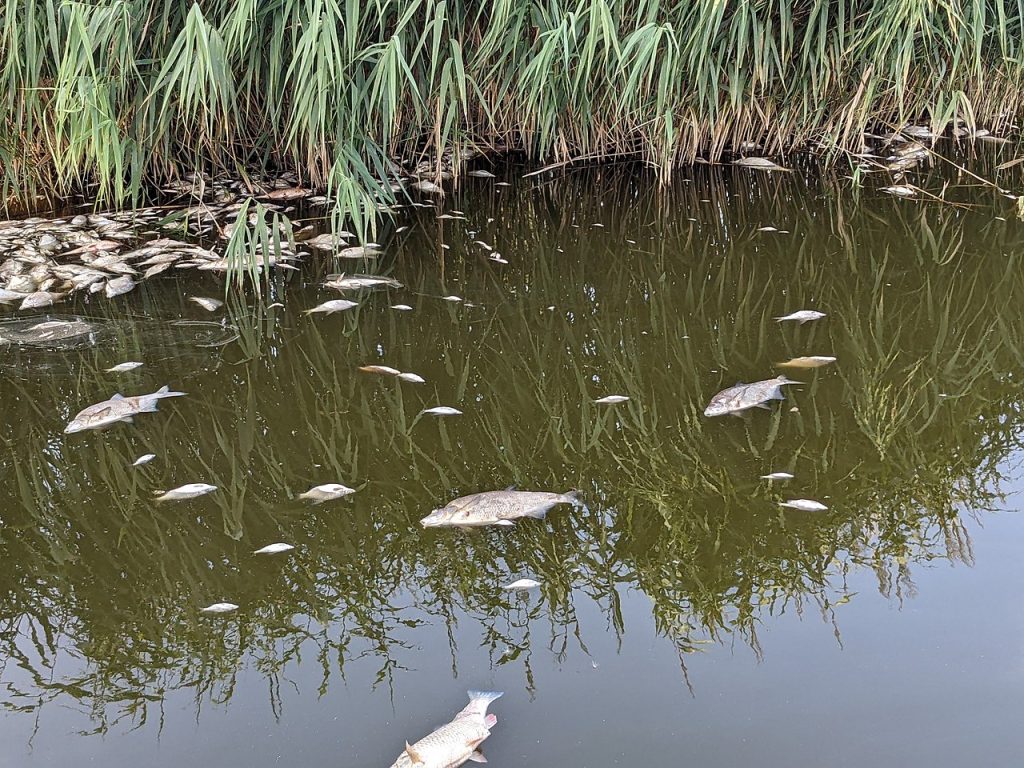
Although these pollutants are not usually at levels that are harmful to human health, they can be devastating for aquatic life
Our “Citizen Science” work
This aims to investigate sources of pollution that reduce the health of our rivers. Monitoring of river water at precise locations relative to known or suspected inflows of pollutants should be able to confirm specific sources, or at least provide direction to further, more detailed studies. Sources include farmland (e.g. nutrients, pesticides, sediment and animal waste), highways and drains (e.g. hydrocarbons and silt), and sewage treatment works (especially nutrients). Collaboration (albeit limited) with researchers such as at Anglia Ruskin University (ARU) , Cambridge and York Universities has yielded information on the more “difficult” issues such as anti-microbial resistance (AMR) and the presence of pharmaceutical chemical in our rivers.
Nutrients
Monitoring of nutrients such as nitrate, orthophosphate and total ammonia has shown convincingly that until recently much of the lower parts of the Cam catchment have been or are still in a eutrophic condition. Unfortunately, the aquifers that feed into our Chalk streams have high nitrate levels from agriculture. As Chalk streams are prioritised to be healthier by the reduction in anthropomorphic pollutant inputs, stripping out of phosphate from effluent from an increasing number of sewage works in our catchment is substantially lowering phosphate levels in some rivers. Our monitoring is showing how beneficial phosphate stripping can be, by strategic multi-site sampling over time such as along the River Granta.
High or even moderate levels of nutrients allow excessive growth of algae. They create an imbalance in types of plant species, for instance reducing the vigour of the iconic Chalk stream plant Water Crowfoot in favour of more brutish species, and can contribute to deleterious lowering of dissolved oxygen levels. We are concerned that Chalk stream invertebrates and fish are being impacted by high nutrients and other pollutions which may occur sporadically or as constant year-round inputs (sewage works) and that their impact is magnified when there is less flow available to dilute them.
We need to be mindful that the impact of a combination of pollutant types may probably be harmful or even lethal to some aquatic species, even if the impact of individual pollutants present may be dismissed as “not harmful” or slightly harmful. Such studies are beyond the capabilities of Citizen Scientists to investigate, however there are various pollutants and water quality variables that Citizen Scientists can monitor.
Turbidity (murkiness)
Turbidity is one more issue of concern. We are investigating the causes of this, as the Cam in Cambridge has become noticeably more murky over the last decade. The Rhee is noticeably more turbid that the Granta. The turbidity in the Rhee is worst around Guilden Morden, but then steadily improves downstream. By the time the river reaches Clayhithe, its once again clear.
So far, this work is suggesting that there are 2 primary causes. One is from “improved” agricultural drainage, especially in the upper reaches of the Rhee. The soil is a fine clay there, and we know that farmers have “improved” drainage in the last decade. We suspect that American Signal Crayfish may also be playing a major role. Their burrows can be as much as 2m deep and they are infesting much of the Cam, particularly around Haslingfield. Note that we’re confident that sewage infrastructure is NOT a cause of the turbidity.
We are monitoring turbidity at Sheep’s Green, roughly monthly. The results shown here
Road run off.
Of particular concern are toxic chemicals in road run-off into our Chalk streams, especially from roads with high density traffic. Very few or no studies have been done of this in the Cam catchment. Some of the sampling and analysis is beyond the scope of citizen science, but there are ways in which CVF may be able to help. We are currently investigating the scope for developing a project on this topic.
Sewage Sleuthing
We are also monitoring E.Coli as an indicator of faecal bacteria, using our portable incubator and petrifilms (a.k.a our “lab”) This work is part of the Clean Bathing Water Project focussed on reducing the impact of sewage pollution on human health, so is discussed in that section.
Some key reports are listed below:
- Why is the Cam so murky? Dec 2025
- Pollution from roads, May 2025
- Turbidity in the Rhee update March 2025
- Organic chemicals at Sheeps Green December 2024
- Nitrates and Phosphates on the Essex Cam February 2024
- Turbidity in the Rhee December 2022
- Phosphate Monitoring in Bourn Brook April 2022
- The Cam and its tributaries August 2021
All our reports can be downloaded here: “our publications”